Sorted By Manufacturer

Stabilo LeftRight

The biggest stationery shop I know on Shanghai’s FuZhou road is in the building labelled “Shanghai culture commercial building”. Unlike the small, independent stationery shops found nearby this shop is state-owned – at least I think it is. In this shop different brands have their own different counters and staff and even though prices are a bit higher than in some surrounding shops prices are still reasonable compared to what you pay in shopping malls or in hip and funky stores which tend to charge you a packet just because they are so cool…

Shanghai culture commercial building

The Stabilo LeftRight

One of the things I bought in the Shanghai culture commercial building, on New Year’s Eve, was Stabilo’s LeftRight. Officially referred to as a retractable pencil this is a leadholder for 2mm leads.

I paid  ¥18 (~ £1.80; $2.90; €2.20) for this set which includes the leadholder, a very nice eraser, a lead sharpener – very nice, too, and a container with four 2mm leads, supposedly 2H. I wouldn’t call these 2H. For me they are definitely softer than H B. As we know there is no standard to say what is HB, what is 2B, etc.,  but even in Asia, where leads with the same grade are generally much softer than in the West, most manufacturers wouldn’t label the leads that come with the LeftRight as 2H. Back to the set: all items that come as part of the set are blue and triangular. There is also a pink set available and as far as I know both, the right-handed and the left-handed version, are available in both colours. The items from the set do look quite nice. In my eye, the worst looking of these items is actually the leadholder, just because it looks a bit plasticy.

The problem

The left-handed and right-handed version of this leadholder come with a “ergonomic triangular thumb pointer grip for correct gripping”. Unfortunately there is a problem with this pen: because of the indentations there is only one comfortable position for holding this pencil. That’s intended. The (probably) unintended consequence is that the 2mm lead will always be used on the same side and will get too wide too soon which means that it will need sharpening too often – at least when you use the LeftRight for writing Western text. The situation might be different if you draw or if you write Asian character and hold the leadholder vertically like a brush. Rotating the pencil, to compensate for the one-sided use, is not really comfortable and rotating the leadholder mechanism in the pencil is only possible of you remove the triangular cap.

The Stabilo LeftRight on a Seagull notebook


Conclusion

The original idea for this leadholder might have been good, but the execution is less than exciting. I would not be surprised if a ballpoint pen user came up with the ergonic grip series idea – which I guess works well on the LeftRight ballpoint pen. It is really a shame because all the items that come with the Pencil set look quite good together. You really want to use this pencil, but it has such an off-putting property… I use it… …nevertheless …at least for now. All in all still not a bad buy as value for money is excellent, at least if you get it for a good price. The LeftRight seems to be for sale in very few countries [1]including China, Malaysia and Russia . I am not sure whether Stabilo wants to start selling it in more countries or whether they have realised that something is not right therefore and don’t introduce the leadholder in more markets.

Presharpened vs. sharpener-sharpened


Price: December 2011

Exchange rates: February 2012

You can find information about the LeftRight on Stabilo’s Malaysia page.

There’s also a commercial for the LeftRight.


References

References
1 including China, Malaysia and Russia

Stabilo LeftRight Read More »

Chung Hwa 6903

Shanghai’s FuZhou road

You might remember Keyroad, a stationery shop on Shanghai’s FuZhou road, from the blog post about the Simbalion Graphic Pencils or from the blog post about the Deli pencil sharpener 0635. How could I not go there again this year… This time I was actually more excited by two other shops on FuZhou road, but I will not go into more detail now and will write more about them another time.

M&G

Back to Keyroad. I bought several packs of pencils, including a few different types of wooden pencils made by M&G, a stationery manufacturer from Shanghai which I only knew as a manufacturer of mechanical pencils and other stationery, but whose wooden pencils I have either never seen or I must have forgotten about.

Chung Hwa 6903

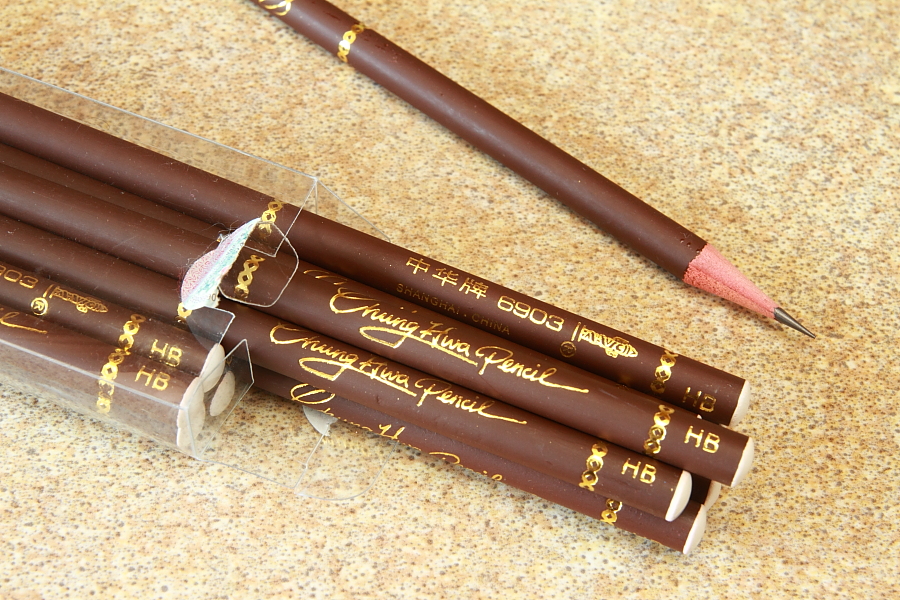
The best looking pencil in the shop was, however, the Chung Hwa 6903. A round, brown pencil with a white-painted cap and golden lettering. What a magnificent looking pencil, at least in my (subjective) opinion. I am not really a fan of round pencils and prefer hexagonal pencils, probably because I don’t have to write using pencils for six hours in one go… Nevertheless, the elegant look of this pencil, the great combination of colours used, the lettering and, not so common for a Chinese pencil, the painted cap made this pencil the star of the shelf.

Quality

There was some disappointment when I sharpened the first 6903 a few days later, the cheapish looking red wood does take some of the magic of the pencil away. There are also some gold flecks on the pencil body near the lettering and the white cap could have been painted a bit better. The 6903 seems to have a slightly larger diameter than some other round pencils, like the Faber-Castell 9008, but compared to the 9008 the difference is less than 1mm.

Chung Hwa 6903 and Staedtler Mars Lumograph

Conclusion

Keeping in mind that this is not an expensive pencil, I paid ¥9.9 (~ £1; $1.55; €1.25) for a dozen, the 6903 provides excellent value for money. The graphite transfer between pages for text written with a 6903 HB is similar to the transfer that is occuring with a Staedtler Mars Lumograph HB, definitely worse than a Staedtler Wopex HB and definitely better than a Tombow Mono 100 HB. If you have a chance to get the Chung Hwa 6903 for a good price you should definitely give it a go.


I am quite happy with these pencils, but wish there was a better version, made of cedar wood, or at least something not so red. I’d be more than happy to pay extra for the better material.


Price: December 2011

Exchange rates: January 2012

The Chung Hwa Drawing Pencil 101 has been reviewed in a previous blog post.

Chung Hwa 6903 Read More »

Chung Hwa 6151

I spent Christmas and New Year in Shanghai and saw our old friend, the green Chung Hwa 101, again …on many occasions. I even think that there were more 101s and fewer unidentifiable No Name pencils than in the past. I did however see one specific pencil replacing the 101 in several places were the 101 was previously the only dominant pencil.

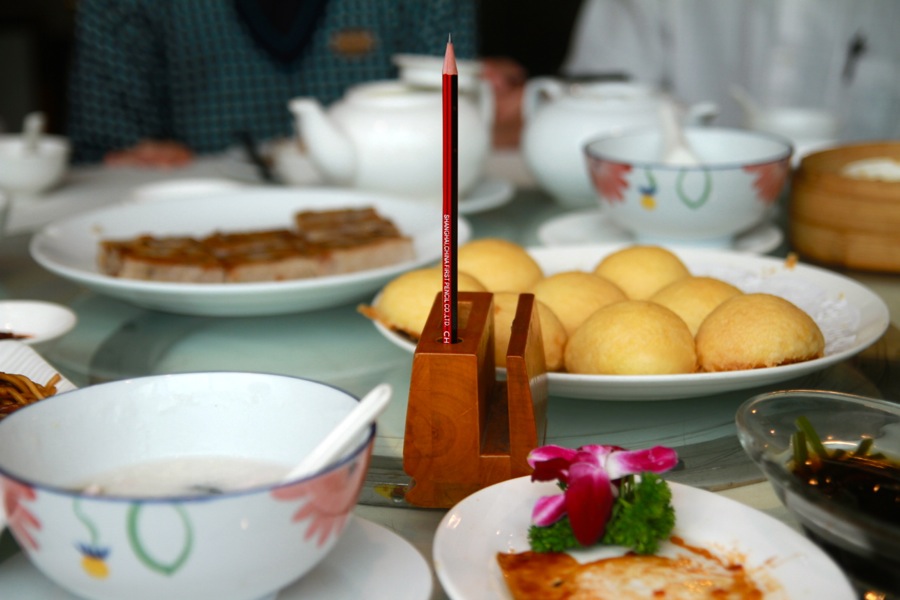
The contender that took over some restaurant tables and cashier desks was the Chung Hwa 6151, previously reviewed at pencil talk. The fact that the 6151 comes with an eraser must make it more desirable in many situations – like the one on the photo, where it is used by patrons to order dim sum by marking the desired types and quantities on a menu.

Chung Hwa 6151 Read More »

X17 – …in with the new

Work is keeping me more than busy, so wasn’t been an update to this blog for a while. I hope I’ll be able to switch back to weekly blog posts, but at the moment I am not too optimistic I will be able to do that. For now here is an update on my notebook:

Introduction

Out with the old, in with the new.

After I got rid of my old Brunnen Kompagnon A7 notebook last month I was looking for a new alternative. If you read the Kompagnon blog post you might remember that I had three favourites (Samsonite, Staufen and X17).  More alternatives were suggested in the comments to the blog post, but the suggested notebooks were unfortunately bigger than A7 and therefore too big for my shirt pocket, so I ruled them out.

The X17

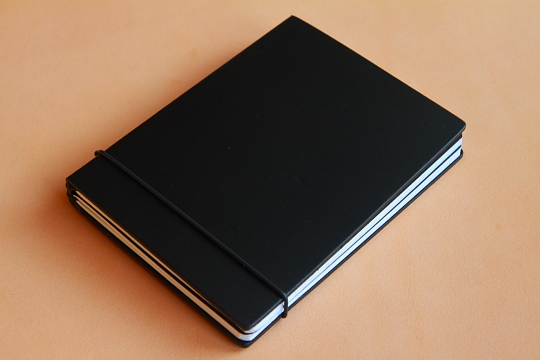
In the end I decided to get the X17 and am quite happy with it so far. I picked the Mode or ModeSkin version. X17 described the Mode version as being made from bonded/regenerated leather. One of the names this material is known by in Germany is Lefa (Lederfaserstoff – leather fibre). It is a very nice material and this version of the X17 notebook is also available in A7 size for two inlay booklets. Let me explain how it works with the booklets: the paper of the X17 isn’t glued to the cover, but is instead removable. You can buy covers, made from different materials, that can hold between two and four booklets. There is also a version for one booklet to be released soon. Booklets are available plain, ruled, squared, as a calendar plus there are a few rather unusual versions, too, e.g. for pilgrims or for teachers. I ordered 2 ruled and two squared inlay booklets. The squared version did, however, surprise me. While squared paper squares in most parts of Europe [1]in Finland squares with 7mm sides are common have sides of 5 mm length the X17 has sides of 2.5 mm length. To my surprise each page has a white border, too. I definitely would have preferred “standard” squared paper, but can live with this paper.

Overall I am quite happy with the X17 notebook.

Advantages

  • The reason why I got rid of my old notebook was that after a few years the plastic of the cover got old, had some tears and these tears had sharp edges which damaged my shirt pockets. The Lefa material of my new notebook feels very pocket friendly and I cannot imagine it ever developing any sharp edges if old, torn or damaged.
  • All the different parts of this notebook can be bought individually, so if any part ever gets damaged it can be replaced
  • I just mentioned that all parts can be bought individually, this means that the inlay booklets can be replaced. I use one for todo lists etc. and replace it if full, while the other booklet gets used for permanent information I would like to keep in the notebook.
  • The pages in the booklets are perforated which makes it easy to rip them out if needed, e.g. to write information down for someone or if you want to leave a note somewhere. Depending on how a traditional notebook is bound, ripping a page is not a good idea. It can make other pages become loose or fall out, too. This was the case with my previous Kompagnon notebook.

Disadvantages

  • Unlike many other notebooks the X17 does not have a pocket in the back. This makes it difficult to store little items like receipts. In my old notebook I used the back pocket to keep bits of paper to use as notes. Since I can remove the perforated pages now I do not really have a need for the pocket any more, but it would be nice, just in case.
  • The way the rubber band (called elastiX) works means that the notebook is not closed as firmly as a moleskin-type notebook. In my shirt pocket the end of the Faber-Castell Perfect Pencil sometimes ends up in the notebook, bending the pages slightly.
  • Because I bought the components for my X17 individually, not as a set, I had to assemble everything myself. This is not a problem in itself, but there were no instructions how to knot the elastiX rubber bands together. I could not find any instructions on the web site, either. I also didn’t realise the X17 comes without a ribbon bookmark – it needs to be ordered separately (I could have probably found out by spending more time on the X17 web site).

Conclusion

Including shipping I paid €24.50 (~ $33.70; £21) for the two booklet version of the X17, this price includes the elastiX rubber bands, and four booklets. Not cheap, but not too expensive either, keeping in mind that the X17 feels very well made. I am sure I will be able to use it for many years to come, hopefully longer than than the Brunnen Kompagnon.


Price: October 2011

Exchange rates: November 2011

References

References
1 in Finland squares with 7mm sides are common

X17 – …in with the new Read More »

Graphite transfer and the Wopex

Today: another blog post about one of the items I have received from Office Hero, the Staedtler Wopex. You might remember my previous two blog posts about the Wopex, one was looking at the Wopex 2B and 2H and one was comparing different eco pencils. Office Hero sent me a pack of twelve Wopex as a free sample. Their normal price is £4.01 (~ $6.35; €4.60) plus VAT.

Why another blog post about the Wopex? The Wopex has one property I really like, even though there are actually also a few things wrong with the Wopex. Back to the characteristic I like, which is why I pick this pencil more and more often when making entries in my diary. The reason is simple and has been mentioned by Koralatov in a recent comment: there’s hardly any graphite transfer between different pages when writing on the reverse. I use my diary to keep track of appointments and to record things that need doing. Graphite from soft pencils will transfer easily after something has been written on the reverse or on the next page, which will in then look very unsightly. Even though you can get graphite from the Wopex to transfer to another page if you want to, as seen on the photos, this transfer is usually not happing under normal circumstance and is therefore not a problem.

Graphite comparison in a Castelli Academic Diary


I think the Wopex has great potential, but it also has a few flaws which I want to mention.

  • The “fibre Wopex material” is too hard, so I use dedicated sharpeners in my office and at home, just for the Wopex. The “fibre Wopex material” is also too hard for rotary blade sharpeners.
  • If you sharpen the Wopex to a very fine point the point will break easily.
  • Small bits of the “fibre Wopex material”, close to the lead, can crumble off when sharpening.
  • There doesn’t seem to be a difference between the Wopex 2B, HB and 2H.

There are quite a few other issues, but mentioning them all would distract from the main issue I want to address here: Wopex‘s great lead that is a very good choice for diaries.

Top-bottom: Mars Lumograph HB, F, Castell 9000 HB, 2B, Technograph B, Wopex HB, Mono HB, Ticonderoga HB

Let’s look at the results from my (unrepresentative) graphite transfer test, conducted by writing on one page, putting the next page on top and applying pressure to the reverse of the next page [1]The effects can be stronger when applying pressure directly to the reverse of the page you wrote on.. Harder and lighter leads do better than softer and darker leads – no surprise here. The best pencil in my comparison was the Staedtler Wopex HB, followed by the Caran d’Ache Technograph 777 B, which has previously been reviewed by penciltalk. The worst pencils in this test were the Tombow Mono 100 HB and the Amos Dixon Ticonderoga HB. This was obviously due to their softness which does however bring other advantages, e.g. better pressure/darkness ratio – I do however prefer a tidy diary and do tend to use the Tombow and Dixon only when smearing, smudging and graphite transfer don’t matter.


Price and exchange rates: October 2011.

I would like to thank

The comparison has been conducted in a Castelli Academic Diary my wife got from her employer. I use a no name  academic diary from my employer, which has very different paper. My initial impressions are that graphite-transer-wise good pencils behave better in my diary, but bad pencils behave worse.

References

References
1 The effects can be stronger when applying pressure directly to the reverse of the page you wrote on.

Graphite transfer and the Wopex Read More »