Let’s start with a photo I got from Henrik. You can see the pencils Angela Merkel, the German chancellor, is using: Faber-Castell Grip 2001s. [1]Did you know that the official way of addressing her is “Your excellency”?
Meanwhile, in the UK the House of Lords decided that they would stop using vellum (goat or calf skin) for printing laws. It looks as if the Cabinet Office minister will now offer to pay the cost (around £80,000 a year) to keep this tradition alive. You can read more about it at the Guardian. Just to avoid any confusion, vellum is parchment made from animal skin, but vellum paper or paper vellum is not. You might have come across vellum paper on Rhodia notepads (High Grade Vellum Paper), but it’s synthetic and not made from animal skin. Rhodia Drive wrote about this a few months ago.
Rhodia High Grade Vellum Paper
British cooking
Staying in the UK: In Rick Stein’s Taste of Shanghai you can see him making notes using a pencil. At first glance I thought it is a Caran d’Ache 844, but after rewinding and looking again I think it’s a Pentel P209 (0.9mm) mechanical pencil.
Last October [1]A fitting month to buy a Columbus pencil. I bought a dozen Columbus in HB for £6.98 including postage from eBay (~$10.10; €9). I like pencils with a theme, and with the Columbus theme and the little ship printed on the pen this pencil doesn’t disappoint [2]…but using the article bumber 1492 instead of 2103 would make it even better.
The Columbus did have many different article numbers since it was first released. It’s current number is 2103 (the six digit number is 113100) and even though it survived it is only officially available in Ireland where it is actually distributed by Tom Martin and Company Limited, the Irish agents for Faber-Castell, not by Faber-Castell directly.
In 1954 Roland Graf von Faber-Castell [3]The father of Anton-Wolfgang Graf von Faber-Castell ..and nine other children. set up a factory in Fermoy in Ireland [4]see p.42, Faber-Castell anniversary magazine 1761-2011; p. 110 Das Bleistiftschloss. In the 1960s the factory was expanded further. This factory is where the Faber-Castell Columbus was being made until the factory closed down in 1990. Similar pencils where made there, too, like the (pre-)Bonanza seen at Contrapuntalism. It looks as if Ireland got so used to the Columbus pencil and as if there was still a demand for this pencil, so after the factory in Fermoy closed down Faber-Castell started making the pencil elsewhere. Tom Martin is now distributing it to satisfy national demand.
In its life the Columbus has been made in many different places: the USA, Ireland, Franconia (Bavaria). I am not sure where the current Columbus is made, the box and the pencil don’t have a “Made in” imprint, but if I was a betting man I would say they’re from Indonesia, where the Bonanza and the Goldfaber are being made.
EcoPencil
The packaging features an EcoPencil sign, something Faber-Castell is using to highlight some of their environmentally friendly pencils, but there doesn’t seem to be a definite criteria needed to get this Faber-Castell stamp of eco approval. Some Brazilian pencils with this stamp are FSC certified, but the Columbus isn’t . Instead the Columbus has PEFC certification (Programme for the Endorsement of Forest Certification schemes). Another reason why the Columbus got the EcoPencil sign is its more eco friendly varnish.
Performance
The Columbus delivers solid performance, as expected from Faber-Castell. The line is very similar to what you would get from a Bonanza and from a Goldfaber. This pencil is nice and pleasant to write with. Like many Faber-Castell pencils it feels a bit harder and lighter than the same grade from other manufacturers like Staedtler, so depending on your taste you might want to buy this pencils in a slightly softer grade.
Price: October 2015
Exchange rates: February 2016
I’d like to thank Róisín Fleming from Tom Martin and Company Limited for the information about the EcoPencil label.
I believe that the use of the image from from the Irish Examiner, shown in this blog post, falls under “fair dealing” as described by the UK Copyright service.
Last week I got two books I was very much looking forward to (plus one I ordered because I ordered anyway). Both were books I got to know from Lexikaliker.
First up is Pencils by Marco Ferreri. The book is from 1996 (there was an exhibition, too) and is part of a project that started a year earlier with an exhibition and book about bookmarks. If you like cutlery, he got that covered with another book as well. The book itself is looking at a many different aspects of pencils and has fantastic pictures.
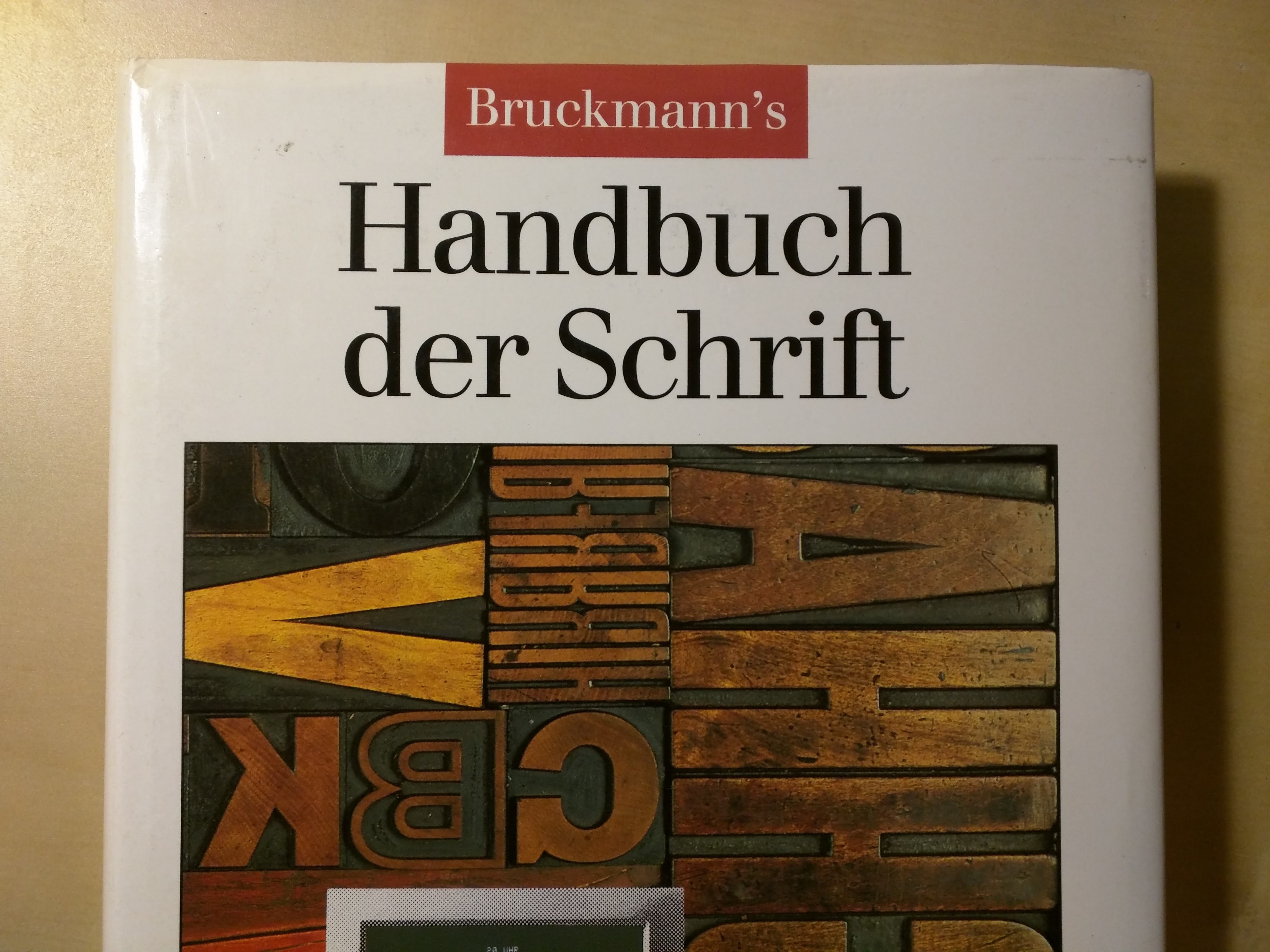
Up next is Bruckmann’s Handbuch der Schrift. I struggle to translate the title, because Schrift in German can mean script, font, scripture, handwriting, … This book covers all of these in great detail and with unusual examples for a book. There are quite a few haptic gimmicks included (examples of Braille, samples of print slides, …). This is certainly one of the best books I own. Unfortunately it doesn’t seem to be in print anymore…
Bruckmann’s Handbuch der Schrift
The last book is a children’s book about pencils, ordered from CW Pencils, together with the Ferreri book. I haven’t really had a look yet, but I am sure the little one will like it.
As you might or might not know: I prefer pencils and fountain pens to ballpoint and similar pens. This means I try to avoid using ballpoint pens if I can. Recently I had a good reason to use one, though. I spare you the details why, but suffice to say that I first tried to avoid using a ballpoint pen.
Faber-Castell Grip 2011 Gel pen
Instead I tried to use my seven year old Faber-Castell Grip 2011 Gel pen. Well, it was worth a try, but didn’t work. The refill cartridge was either dried out or used up. I assume it was used up, because I tried to squeeze any leftover gel out, as you might see from the dented cartridge in the photo, but I was unsuccessful.
As the Gelroller didn’t work I tried Staedler’s Welsh-made stick 430 M (also discontinued, at least the Welsh version) which I stored in the same pencil case as the Grip 2011. After many years of neglect it started writing immediately and left a clear line without any skipping. What a tough worker the Staedtler stick is! I was positively impressed.
Faber-Castell Gelroller Refill Blue
I remember that I loved the line I got from the Grip 2011’s original cartridge, a Faber-Castell Gelroller Refill Blue (24 97 51), but unfortunately Faber-Castell stopped making these refills. I was searching for alternatives for quite a while, but all I could find was either very expensive, from the more luxurious brands, or erasable (using an ‘ink killer’). The erasable version was even from Faber-Castell, but I wasn’t keen on erasable ink for this pen.
It’s a Standard G2, parker style ballpoint refill size so it did fit the Grip 2011 Gel pen perfectly. As far as I can tell the Grip 2011 Gel pen is using exactly the same body as the Grip 2011 ballpoint pen , but with an additional “Gel” imprint at the end of the pen.
My Grip 2011 family
My impressions, based on the memory I have of the original Faber-Castell refill are quite similar to The Pen Addict’s (assuming that Schneider’s Gelion pen uses the Gelion 39 refill). I didn’t see his review until after I tried my refill, so I wasn’t influenced by his review. In a nutshell: I think it’s great refill, but on the type of paper I have tried so far the refill’s ink will get (slightly) soaked into the paper, so the border of the lines you write are not as clear as the one Faber-Castell’s discontinued refill produced. I love clear, sharp lines, but everyone is different – you might not mind.
Conclusion
Overall, this is a very reasonably priced refill that provides great value for money. Once it’s used up, which might take years, I might be looking for a refill with crisper line borders, though.
Price: January 2016
Exchange rates: February 2016
This review has also been posted on The Pen Company’s blog, but just to spell it out, I have not received money for this review (or any other reviews) and have paid for the refill.