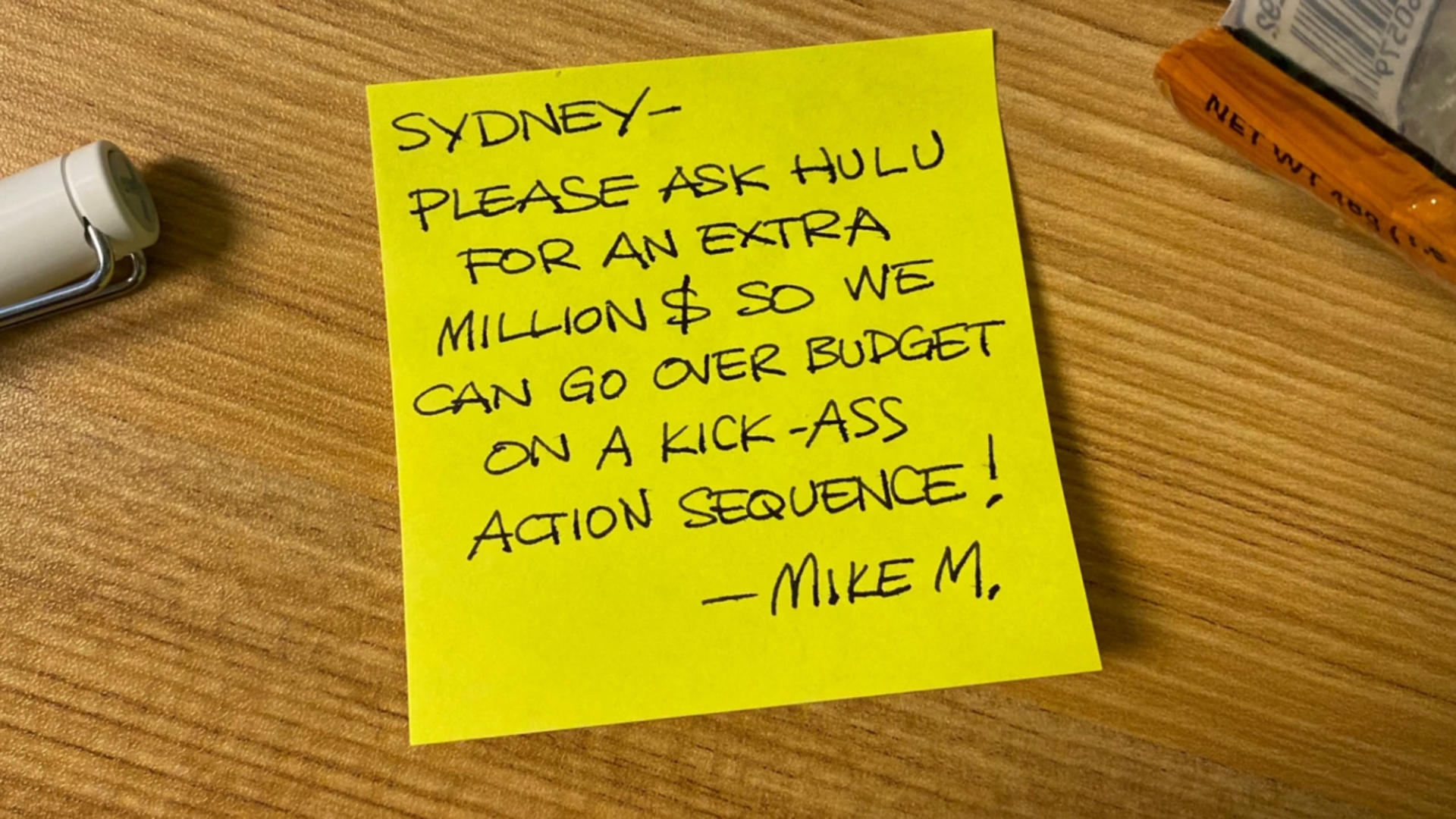
Eagle-eyed Bleistift reader Tomasz Maped [1]I didn’t realise that Maped, the name of a French stationery company, is a surname. from Poland contacted me after he noticed a Lamy Safari in the first episode of the second season of Solar Opposites.
I must have missed that detail when I watched this episode so am especially thankful to Tomasz for pointing this out.
The screenshots in this blog post has been taken from Season 2 Episode 1 of Solar Opposites. I believe that the use of the screenshot shown in this blog post falls under “fair dealing” as described by the UK Copyright service.
If they have been left unused for a while it is not uncommon for gel pens / gel refills to stop working properly.
Unfortunately, this means that the more pens you have in your rotation / are using at the same time, the more likely you are not using them enough. That’s just what happened to me.
Top to bottom: Schneider Gelion (in a Caran d’Ache 849), Zebra JSB (in a Holbein x Rotring 600 3 in 1), Stabilo pointVisco
In the case of my Holbein x Rotring multipen the Zebra refill was only two years old. The blue refill is perfectly fine. Being blue meant it got used regularly, but the red refill didn’t get used quite as much, so stopped working. I have replaced it now with a red Lamy refill. The new red colour is grey-ish as is common for ballpoint refills, but it shouldn’t dry out as fast as the vibrant red Zebra JSB refill.
The Gelion refill was older. I actually made a video at the time that shows how to use this refill in a Cara d’Ache 849 …but as the refill was idle for too long it also stopped working.
The final gel-like pen that stopped working recently was Stabilo’s pointVisco. It did survive very long though: I think I got my first pointVisco in 2008, but as I had a set of mixed colours, some of them just weren’t used as much, so stopped working.
There are some common tricks to try to revive gel pens and refills, e.g. putting them in hot water. I tried these trick, but was unsuccessful and have decided to say goodbye to these two refills and the pen.
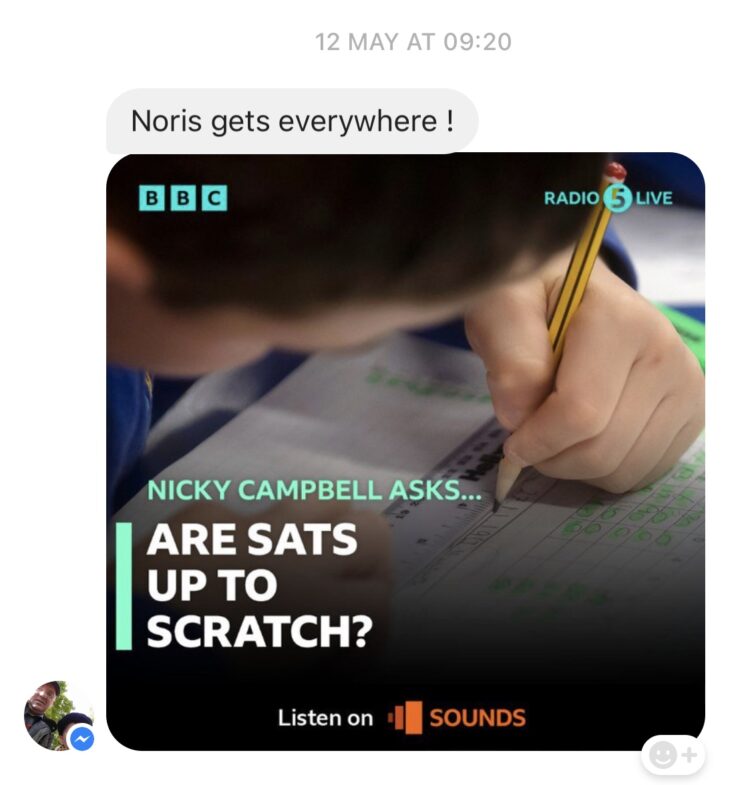
SATs are tests used UK primary schools. With the Noris being the most commonly used pencil in primary schools here, it’s no wonder that the Noris is featured in the photo used for this show.
The Noris is certainly a common occurrence in photos and videos whenever the media report about schools. I wonder if the introduction of the upcycled Noris will change this.
My favourite iron gall ink is the one made by Bach’s Tinten. Unfortunately, it is quite difficult to get hold of it …and I fear by now it is not being made any more.
I have two ink bottles from them. One was bought in 2009 as a set with a quill and instructions. The other ink bottle was bought just by itself, i.e. without a quill and instructions.
You might have seen the ink bottle with the crimson ink before as it made an appearance in previous blog posts here at Bleistift.
When cleaning up this weekend, I came across the instruction sheet that came with the ink set. It’s rather nice, so I thought I share a translation with you here:
Fine Historical Stationery Writing like in old times At a time when new writing instruments are being introduced to the market by the industry almost every day, the desire for the original arises more and more often in many people. This desire is to be fulfilled by the historical stationery, individually handcrafted as in the old days, taking us back to a time when writing was a very personal way of expression. The inks The inks are made according to old recipes, some of which were thought to have been forgotten. Among others, the following natural colour materials are used: Black inks are made from an acidic tannin-iron compound. Coloured inks contain, for example, green walnut shells (brown), redwood and chochal lice (red), indigo (blue), turmeric with indigo (green), and various other ingredients, especially gum arabic as a binder. The iron gall ink is a valuable document ink; its blue ink strokes turn black on the paper and cannot be decomposed – neither by acids, alkalis nor by constant sunlight. The historic inks are bottled in jars faithfully reproduced from a 19th century model. As in those days, the ink jars are corked and sealed. To open the jar, you clasp it tightly with your hand and press your thumb against the cork. The sealing wax then pops open. The jars should not be left open for any length of time. The quills Since time immemorial, people have written with the goose quill, which was replaced at the beginning of the 19th century by the steel pen. At the beginning of the 19th century, it was replaced by the steel nib and later by the fountain pen. Raven, eagle and swan feathers were also used for writing. The bird feather must not be left in the ink glass, because otherwise it will soften, since it is made of horn. It can be re-cut with a very fine knife. Keel and steel nibs are best for writing on smooth, well-glued paper. Letter, bank mail, and butt papers are preferred, or for special work, genuine skin parchments.
One of the most helpful stationery companies I came across when it comes to fixing issues is Tactile Turn.
A short explanation why: I had some problems with my Tactile Turn Gist fountain pen and Will Hodges helped me several times, trying to fix the issues that occurred[1]Initially I received a replacement cap because of the marks on the original cap. When the replacement cap failed a few years later (when I clipped the pen the pressure from the clip made the finial … Continue reading.
Below is a video from 2020 showing the final cap [2]If you see any advertising it’s YouTube’s doing. I don’t have video monetization turned on.. You can also see the process of the first cap change in a video from 2017 if that interests you.
Why do I mention all this? It’s because their pens are guaranteed for life, which makes you (or at least me) more likely to part with my money ..thinking I will have a pen I can always send in if there were any issues.
With that in mind their latest Seasonal Release looks very tempting. Yes, not cheap, but if I wanted to convince myself to buy it I could use the lifetime warranty as an argument.
This latest Seasonal Release is called the “8-Bit” and it just looks 8-Bit, too. It is also available in Europe from Kohezi, but I think shipping to the UK will come with a big bill independent of whether you ship from the US or the EU: Even though Kohezi’s web site lists the prices in Pounds the small print states that items are shipped from the Netherlands and that they have no control over customs, which implies they don’t prepay customs etc, it’s up to the customer.
As part of this Seasonal Release you also get to play an 8-Bit like game that reminds me of R-Type on their web site: a game where you shoot other stationery with the 8-Bit pen, including yellow, eraser-tipped pencils.
Initially I received a replacement cap because of the marks on the original cap. When the replacement cap failed a few years later (when I clipped the pen the pressure from the clip made the finial pop out) I got another replacement cap, but as material and shape of the pen had changed it didn’t fit. After sending the whole pen in I got a pen back with a cap that works. Unfortunately it is made from another material, with another size of pattern, the finial doesn’t sit right and the cap is very tight to screw on, but given the circumstances this was the best solution possible